



🎓 Homework Deadline Looming?
Struggling with assignments, projects, or lab reports on this topic? Connect with our expert academic tutors to get personalized study support tonight.
Get Expert Help Now →Introduction to Simulacra and Simulation
The concept of the precession of simulacra is central to Jean Baudrillard's seminal work, Simulacra and Simulation. In this essay, Baudrillard explores the idea that our contemporary society has become characterized by the proliferation of simulacra, or copies without an original. He argues that these simulacra have replaced reality, creating a world of hyperreality that is more real than reality itself. This has significant implications for our understanding of the world and our place within it.Historical Stages of the Sign
Baudrillard outlines four distinct historical stages of the sign, which map the trajectory from symbols that faithfully represent reality to symbols that bear no relationship to any reality whatsoever. The first stage is characterized by symbols that represent reality in a straightforward way. The second stage involves symbols that mask and pervert reality. The third stage is marked by symbols that mask the absence of reality. Finally, the fourth stage is characterized by pure simulacra, or signs that bear no relationship to any reality.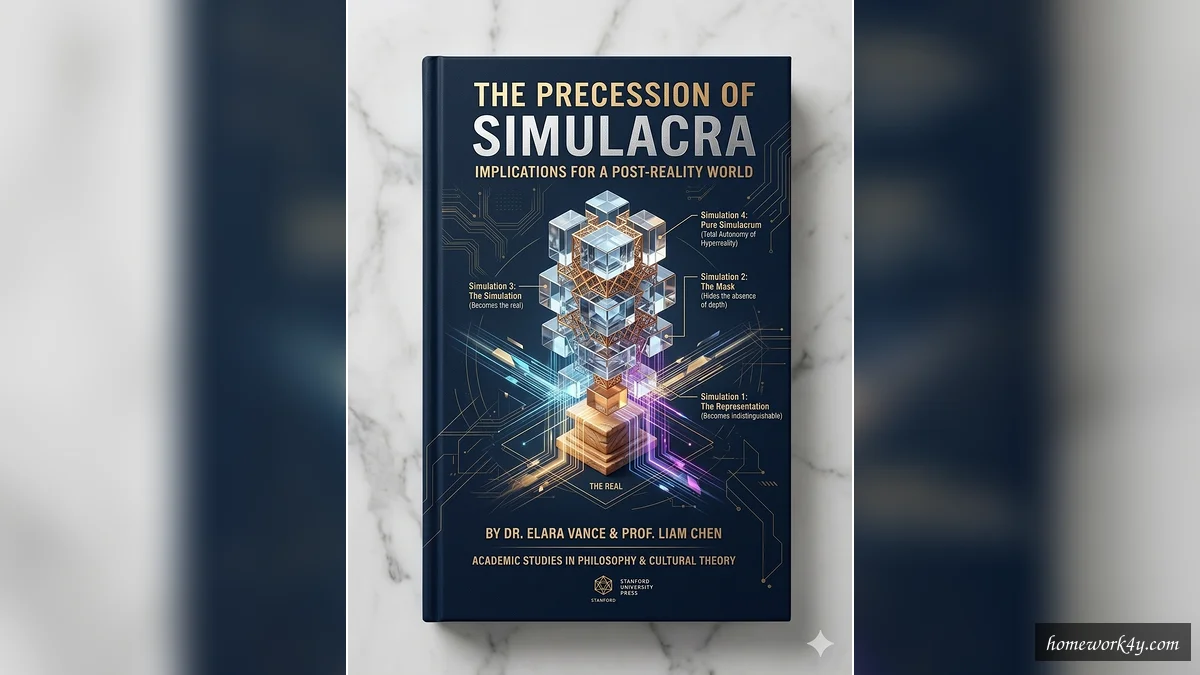
Hyperreality and the Simulacrum
The precession of simulacra has led to the creation of a hyperreal world, where simulations and models have replaced reality. This hyperreal world is characterized by the proliferation of simulacra, which are copies without an original. Baudrillard argues that this has significant implications for our understanding of the world and our place within it. In a hyperreal world, it becomes increasingly difficult to distinguish between reality and simulation.The Methodological Approach of Baudrillard
Baudrillard's methodological approach is characterized by a critical analysis of the role of signs and symbols in shaping our understanding of reality. He argues that the proliferation of simulacra has led to a situation in which the map has replaced the territory, and the simulation has replaced the real thing. This has significant implications for our understanding of the world and our place within it.Critical Review and Academic Debate
Baudrillard's work has been the subject of significant critical review and academic debate. Some critics have argued that his ideas are too pessimistic, and that they fail to account for the ways in which individuals can resist and challenge the dominant ideologies of hyperreality. Others have argued that his ideas are too broad, and that they fail to account for the complexities and nuances of contemporary society. Despite these criticisms, Baudrillard's work remains a significant contribution to our understanding of the role of signs and symbols in shaping our understanding of reality.Implications of the Precession of Simulacra
The precession of simulacra has significant implications for our understanding of the world and our place within it. In a hyperreal world, it becomes increasingly difficult to distinguish between reality and simulation. This has significant implications for our understanding of truth and reality, and for our ability to critically evaluate the information that we are presented with. It also has significant implications for our understanding of the role of signs and symbols in shaping our understanding of reality, and for our ability to resist and challenge the dominant ideologies of hyperreality.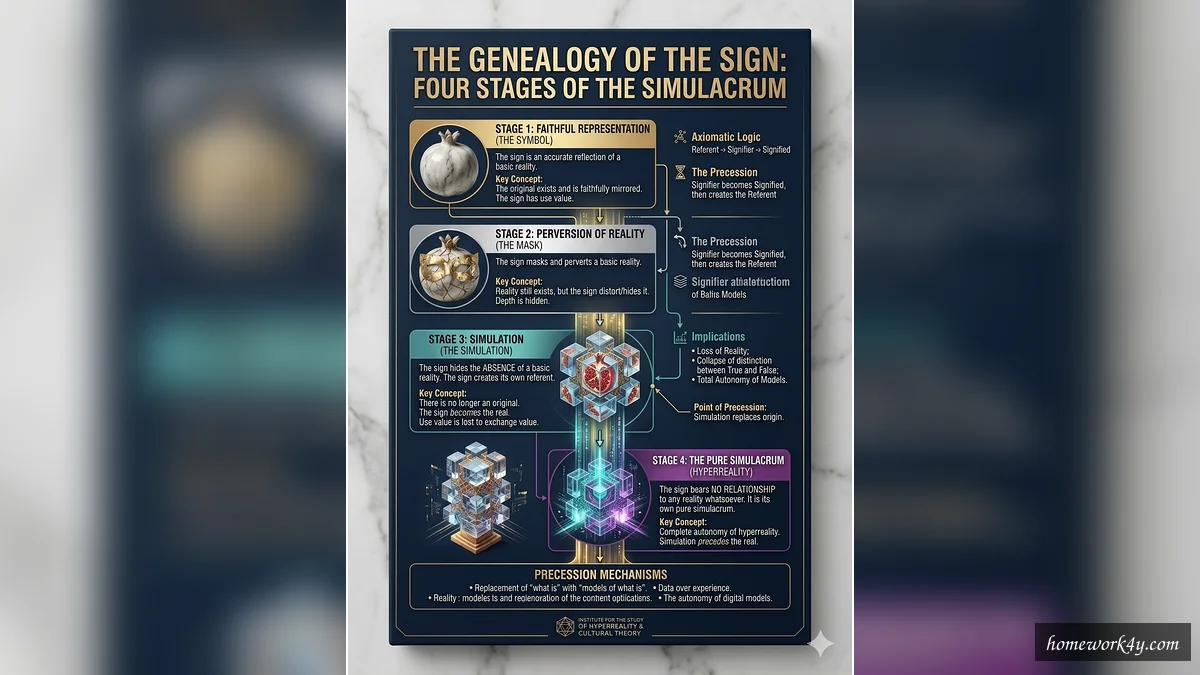
| Stage | Description |
|---|---|
| First Stage | Symbols that represent reality in a straightforward way |
| Second Stage | Symbols that mask and pervert reality |
| Third Stage | Symbols that mask the absence of reality |
| Fourth Stage | Pure simulacra, or signs that bear no relationship to any reality |