


🎓 Homework Deadline Looming?
Struggling with assignments, projects, or lab reports on this topic? Connect with our expert academic tutors to get personalized study support tonight.
Get Expert Help Now →Introduction to the Selective Theory Sorter
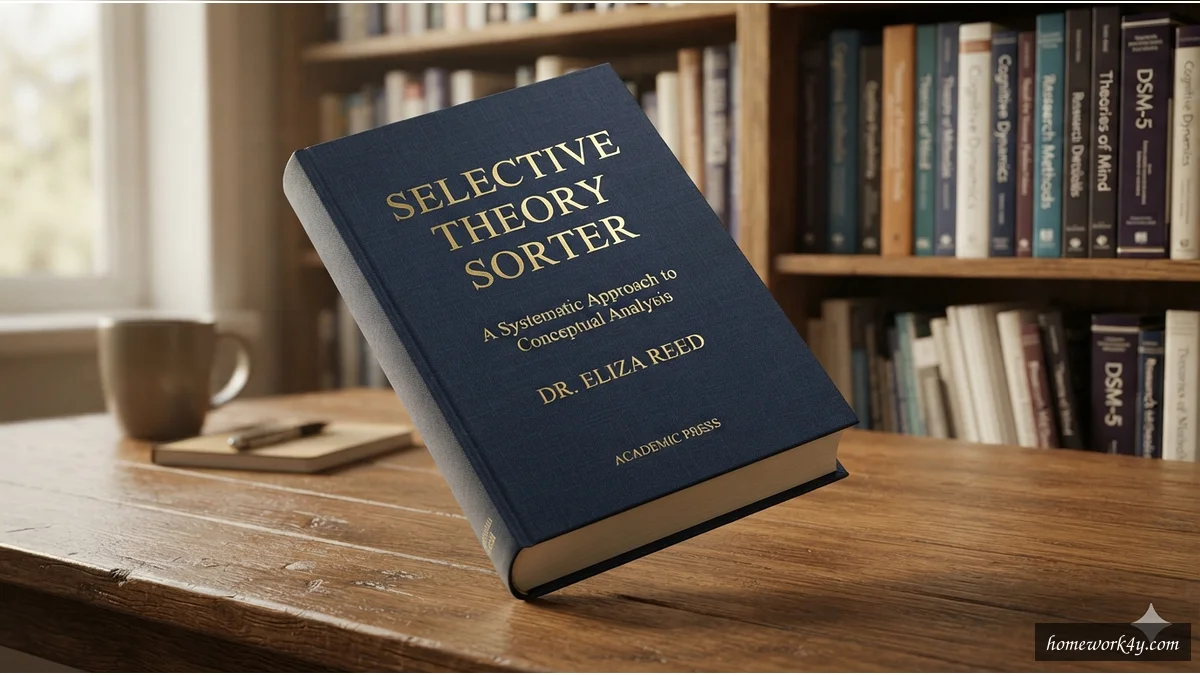
The Selective Theory Sorter (STS) is a highly specialized psychological assessment tool developed by Duane A. Halbur and Kimberly Vess Halbur, pioneering counselor educators and psychotherapists. The STS is widely utilized across graduate programs in counselor education, clinical mental health counseling, and psychotherapy practicums. The revised edition, STS-R, offers a structured and conceptually rigorous framework for training clinicians to identify their personal theoretical and therapeutic orientation.Methodological Framework of the Selective Theory Sorter
The STS utilizes a self-reflective survey design, where respondents evaluate their psychological alignment with diverse therapeutic statements scored along an interval spectrum. This approach enables individuals to systematically cross-reference their personal worldviews with major historical schools of psychotherapy, including Psychoanalytic, Adlerian, Client-Centered, Gestalt, Behaviorism, Cognitive-Behavioral (CBT), and Existential paradigms.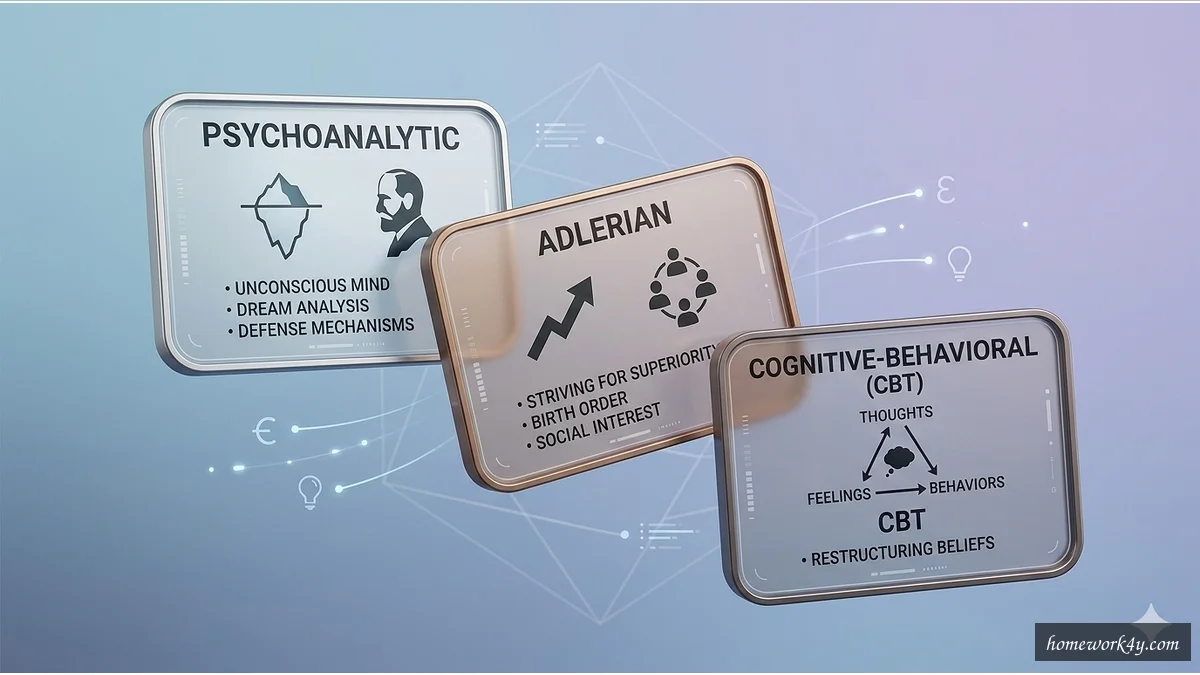
Philosophical Underpinnings of the Selective Theory Sorter
The authors of the STS argue that effective, ethical, and culturally competent counseling requires an intentional congruence between the clinician's personal values and their applied theoretical framework. This perspective rejects eclectic, ungrounded clinical practice, emphasizing the importance of self-awareness and intentional selection of a therapeutic methodology. By promoting ethical efficacy and respect for multicultural patient perspectives, the STS serves as an indispensable reflective asset for transforming students into self-aware, specialized practitioners.Core Pedagogical Axes of the Selective Theory Sorter
The STS deconstructs its core pedagogical axes by systematically cross-referencing individual worldviews with major historical schools of psychotherapy. This approach enables training clinicians to identify areas of alignment and divergence between their personal values and theoretical orientations, facilitating a deeper understanding of their professional identity and role as counselors.Applications of the Selective Theory Sorter in Counselor Education
The STS has far-reaching implications for counselor education, clinical mental health counseling, and psychotherapy practicums. By providing a structured framework for self-reflection and exploration, the STS enables students to develop a deeper understanding of their personal theoretical and therapeutic orientation, ultimately leading to more effective and ethical counseling practice.| Theoretical Orientation | Description | Key Principles |
|---|---|---|
| Psychoanalytic | Emphasizes unconscious thoughts and childhood experiences | Free association, dream analysis, transference |
| Adlerian | Focused on social interest and striving for superiority | Goal-oriented, holistic, and humanistic |
| Client-Centered | Emphasizes empathy, genuineness, and unconditional positive regard | Non-directive, person-centered, and humanistic |
| Gestalt | Focuses on the present moment and personal responsibility | Awareness, experimentation, and personal growth |
| Behaviorism | Emphasizes observable behavior and environmental factors | Classical conditioning, operant conditioning, and social learning |
| Cognitive-Behavioral (CBT) | Focuses on thought patterns, emotions, and behaviors | Cognitive restructuring, exposure, and response prevention |
| Existential | Emphasizes personal freedom, choice, and responsibility | Authenticity, meaning-making, and existential awareness |