



🎓 Homework Deadline Looming?
Struggling with assignments, projects, or lab reports on this topic? Connect with our expert academic tutors to get personalized study support tonight.
Get Expert Help Now →Introduction to the Dialogues
The Five Dialogues are a cornerstone of Western philosophy, offering a comprehensive and nuanced exploration of Plato's early thought. Through the character of Socrates, Plato employs the Socratic elenchus, a method of questioning and cross-examination, to challenge societal assumptions and investigate the nature of reality and knowledge. This approach allows for a systematic examination of complex philosophical concepts, including the Theory of Forms, the immortality of the soul, and the relationship between virtue and knowledge.The Theory of Forms and the Nature of Reality
The Theory of Forms, a central concept in Plato's philosophy, posits that abstract entities, such as justice, beauty, and goodness, are more fundamental than the physical world. The dialogues explore the implications of this theory, arguing that the world we experience through our senses is mere appearance, while the true reality consists of eternal, unchanging Forms. This metaphysical framework underlies Plato's epistemology, as he seeks to understand how we can have knowledge of these Forms and how they relate to the world of sensory experience.The Immortality of the Soul and the Concept of Recollection

The Immortality of the Soul and the Concept of Recollection
The Phaedo, one of the Five Dialogues, presents a detailed argument for the immortality of the soul. Plato argues that the soul exists before birth and will continue to exist after death, and that our knowledge of the Forms is a result of recollection, rather than sense experience. This concept of recollection is central to Plato's theory of knowledge, as it suggests that our understanding of the world is not derived from sensory experience, but rather from our prior knowledge of the Forms.The Relationship Between Virtue and Knowledge
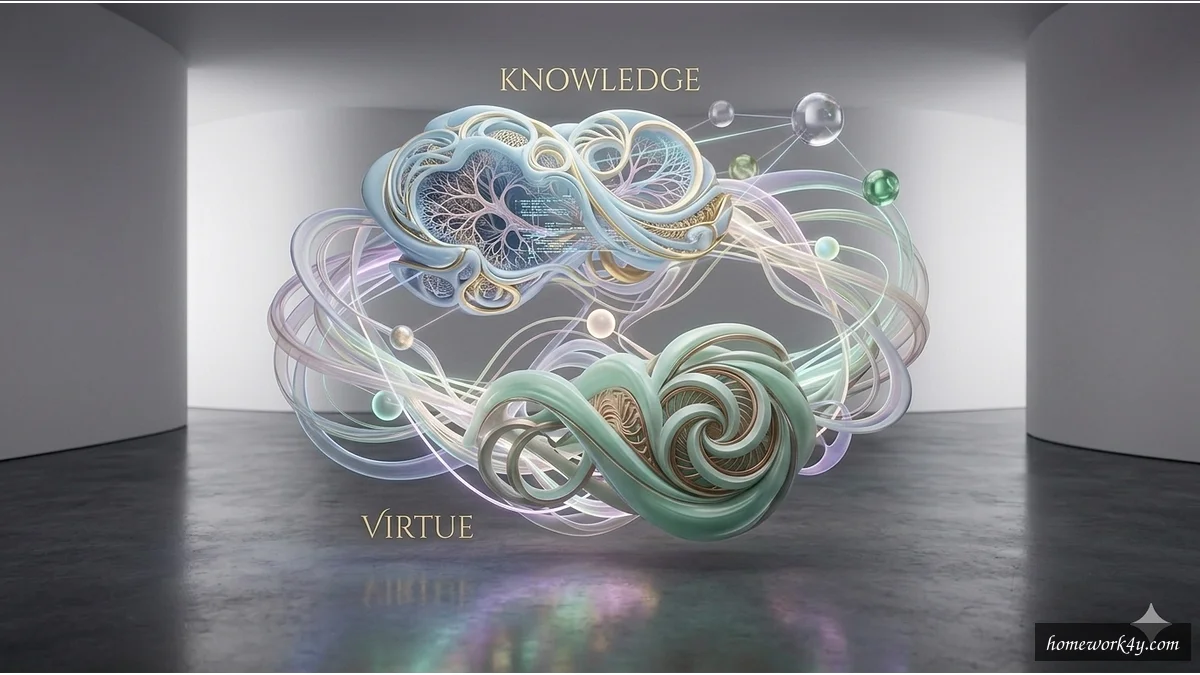
The Meno, another of the Five Dialogues, explores the relationship between virtue and knowledge. Plato argues that virtue is not a matter of luck or chance, but rather a result of knowledge and understanding. The dialogue examines the nature of virtue, asking whether it can be taught or whether it is an innate quality. This inquiry into the nature of virtue is closely tied to the concept of the examined life, as Plato seeks to understand how we can live a virtuous life and how we can acquire the knowledge necessary for such a life.The Significance of the Five Dialogues in Education and Society
The Five Dialogues remain a foundational text in philosophy, education, and the humanities, offering a rich and nuanced exploration of complex philosophical concepts. The dialogues provide a model for critical thinking, dialectical reasoning, and ethical decision-making, and continue to influence fields such as law, politics, and philosophy. As a pedagogical tool, the Five Dialogues offer a unique opportunity for students to engage with fundamental questions about the nature of reality, knowledge, and virtue, and to develop the critical thinking and analytical skills necessary for a life of intellectual integrity and civic responsibility.Comparison of Key Concepts in the Five Dialogues
| Dialogue | Key Concepts | Philosophical Themes |
|---|---|---|
| Euthyphro | Piety, civic obedience, the nature of virtue | The relationship between morality and law, the role of tradition in shaping moral values |
| Apology | The defense of Socrates, the nature of wisdom and knowledge | The importance of critical thinking and intellectual integrity, the role of the philosopher in society |
| Crito | Civic obedience, the nature of justice and morality | The relationship between the individual and the state, the role of law in shaping moral values |
| Meno | The nature of virtue, the relationship between virtue and knowledge | The importance of education and critical thinking, the role of the teacher in shaping moral values |
| Phaedo | The immortality of the soul, the nature of reality and knowledge | The relationship between the world of sensory experience and the world of Forms, the role of the philosopher in understanding the nature of reality |
Key Takeaways and Actionable Insights
The Five Dialogues offer a wealth of insights and perspectives on fundamental philosophical concepts, including the nature of reality, knowledge, and virtue. Some key takeaways from the dialogues include:- The importance of critical thinking and intellectual integrity in shaping moral values and understanding the world
- The role of education and the teacher in shaping moral values and promoting critical thinking
- The relationship between the individual and the state, and the role of law in shaping moral values
- The importance of examining one's life and values, and the role of the philosopher in promoting such examination