



🎓 Homework Deadline Looming?
Struggling with assignments, projects, or lab reports on this topic? Connect with our expert academic tutors to get personalized study support tonight.
Get Expert Help Now →Introduction to Goffman's Concept of Face Work
Erving Goffman's seminal essay, 'On Face-Work: An Analysis of Ritual Elements in Social Interaction,' introduces the concept of face-work as a critical component of interpersonal dynamics. Goffman, a preeminent sociologist and social psychologist, argues that human conversations are akin to a theatrical stage where individuals constantly negotiate their public identity. This concept of face-work is rooted in the idea that individuals claim a positive social value for themselves during interactions, which they then strive to maintain, protect, or restore.Goffman's Methodological Approach: Structural Symbolic Interactionism
Goffman's methodological approach relies on structural symbolic interactionism, which frames human conversations as a series of negotiated maneuvers aimed at avoiding social friction and embarrassment. This approach emphasizes the importance of understanding the ritual elements that govern everyday human interaction, including the ways in which individuals use language, gestures, and other forms of communication to manage their public identity.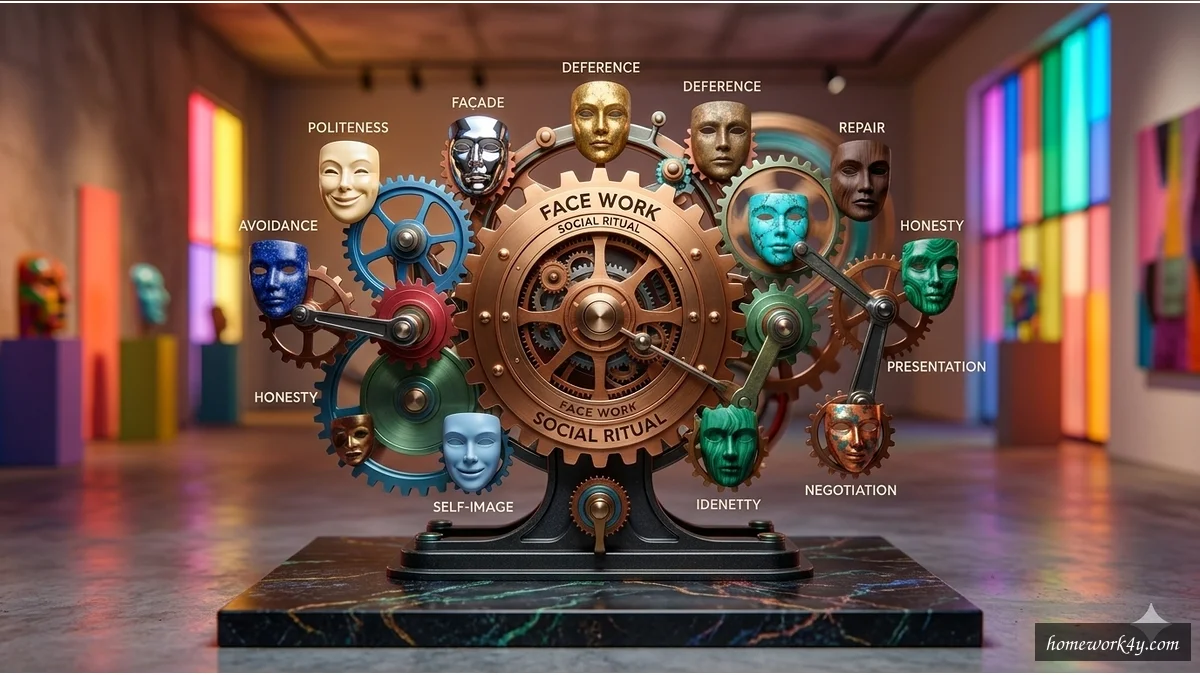
The Concept of Face: A Positive Social Value
At its core, Goffman's concept of face refers to the positive social value that an individual claims for themselves during an interaction. This face is not fixed and can be influenced by various factors, including social context, cultural norms, and power dynamics. Goffman argues that individuals are motivated to maintain, protect, or restore their face in order to avoid social friction and embarrassment, which can have negative consequences for their social relationships and overall well-being.Ritual Practices: Maintaining, Protecting, or Restoring Face
Goffman identifies several ritual practices that individuals use to maintain, protect, or restore their face, including politeness, courtesy, and other forms of social etiquette. These practices are designed to avoid social friction and embarrassment, while also maintaining a positive social value. For example, individuals may use phrases such as 'excuse me' or 'sorry' to repair a potentially face-threatening situation, or they may engage in small talk to establish a sense of rapport and avoid awkwardness.Philosophical Implications: Challenging the Illusion of Natural Behavior
Goffman's work challenges the illusion of natural, unscripted human behavior, revealing that daily life is an ongoing series of negotiated maneuvers aimed at avoiding social friction and embarrassment. This perspective highlights the importance of understanding the ritual elements that govern everyday human interaction, including the ways in which individuals use language, gestures, and other forms of communication to manage their public identity.Educational and Societal Significance
Goffman's essay remains an irreplaceable pedagogical asset for understanding cultural communication, structural power dynamics, and the hidden psychological laws that stabilize or disrupt human communities. The concept of face-work has been widely applied in various fields, including sociology, social psychology, communication studies, and cultural anthropology, providing a valuable framework for analyzing and understanding the complexities of human interaction.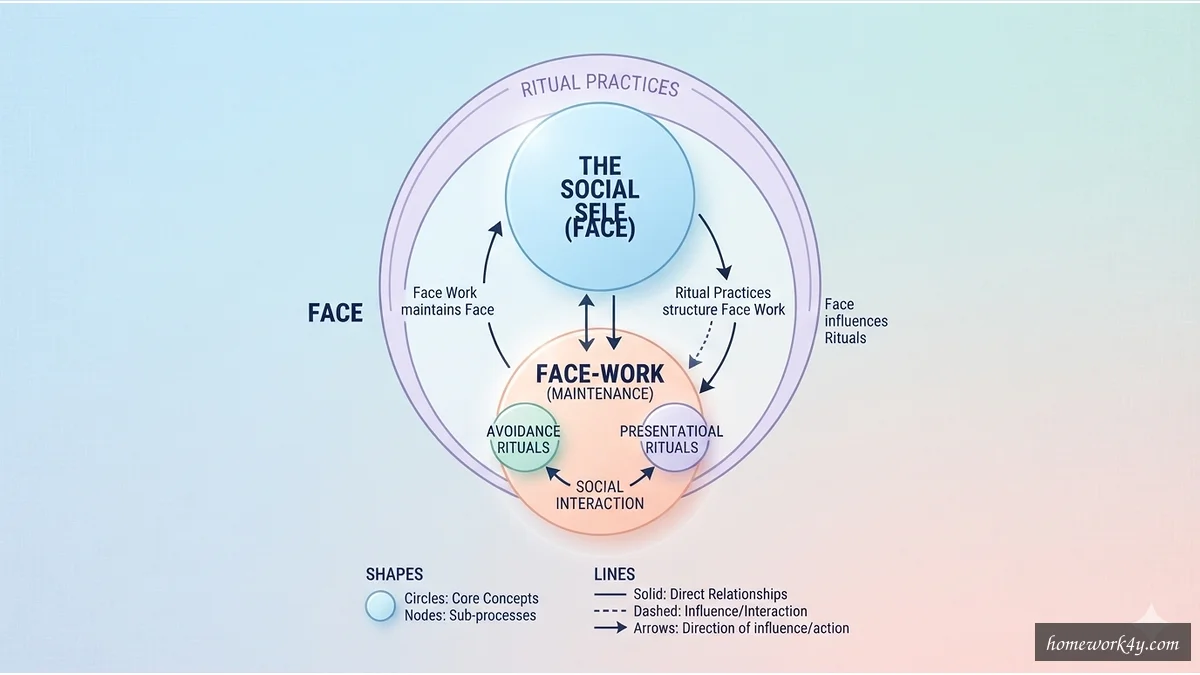
| Concept | Definition | Example |
|---|---|---|
| Face | A positive social value claimed by an individual during an interaction | Using polite language to maintain a positive social value |
| Face Work | Ritual elements in social interaction aimed at maintaining, protecting, or restoring face | Engaging in small talk to establish rapport and avoid awkwardness |
| Ritual Practices | Forms of social etiquette used to maintain, protect, or restore face | Using phrases such as 'excuse me' or 'sorry' to repair a potentially face-threatening situation |