


🎓 Homework Deadline Looming?
Struggling with assignments, projects, or lab reports on this topic? Connect with our expert academic tutors to get personalized study support tonight.
Get Expert Help Now →Historical Context and Development
The field of industrial/organizational psychology has evolved significantly over the years, with its roots in social psychology and statistics. The eighth edition of Ronald E. Riggio's textbook, Introduction to Industrial/Organizational Psychology, provides a comprehensive overview of the contemporary corporate environment through the lens of industrial and organizational psychology. This edition emphasizes the importance of empirical examination and evidence-based practices in understanding employee behavior and workplace optimization.Methodological Approach
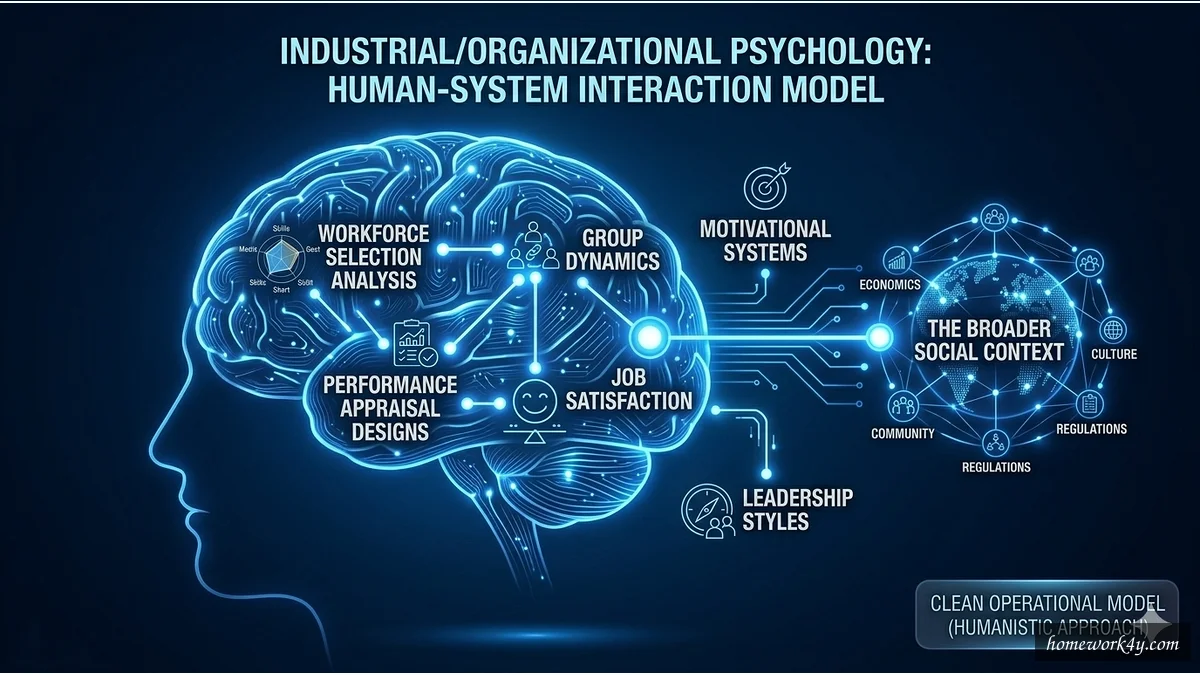
The methodological approach in industrial/organizational psychology emphasizes the use of statistical data and social psychology theories to analyze employee behavior and workplace dynamics. This approach enables organizations to make informed decisions about workforce selection, performance evaluation, group dynamics, work motivation systems, and leadership styles. By combining empirical research with theoretical frameworks, industrial/organizational psychology provides a rigorous and systematic approach to understanding the complexities of the workplace.Core Operational Axes
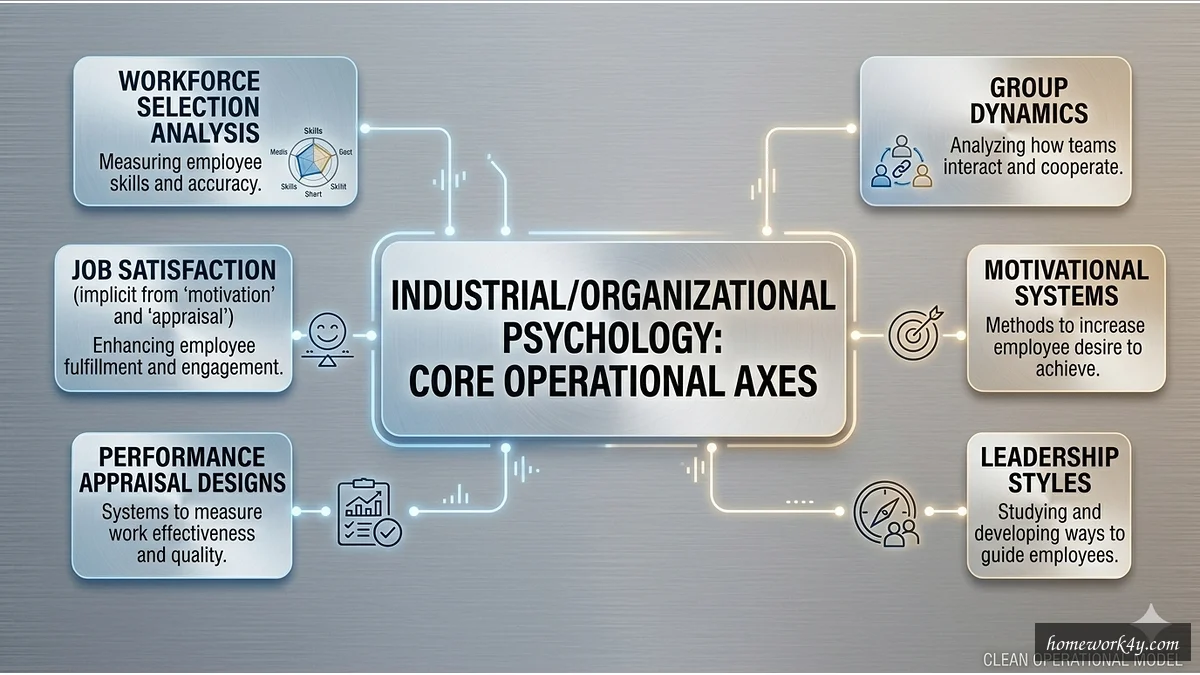
The core operational axes of industrial/organizational psychology include workforce selection analytics, performance evaluation designs, group dynamics, work motivation systems, and leadership styles. These axes are interconnected and interdependent, requiring a comprehensive understanding of the complex relationships between employees, organizations, and the broader social context. By deconstructing these core operational axes, organizations can identify areas for improvement and develop strategies to optimize employee performance and organizational effectiveness.Philosophical Underpinnings
The philosophical underpinnings of industrial/organizational psychology emphasize the importance of viewing employees as complex psychological individuals, rather than mechanical pieces. This perspective recognizes that employee motivation, satisfaction, and mental health are critical drivers of corporate survival and success. By adopting a more human-centered approach, organizations can create a positive and inclusive work environment that fosters employee well-being and productivity.Education and Societal Impact
The field of industrial/organizational psychology has significant educational and societal implications. As a pedagogical tool, Riggio's textbook provides a foundational framework for training future human resource executives, organizational consultants, and management theorists. By equipping students with the knowledge and skills to build ethical, inclusive, and productive workplace architectures, industrial/organizational psychology can contribute to the development of more effective and responsible organizations.Key Concepts and Theories
Some key concepts and theories in industrial/organizational psychology include:- Workforce selection analytics: the use of statistical methods to identify the most suitable candidates for a particular job or organization.
- Performance evaluation designs: the development of systematic approaches to evaluating employee performance and providing feedback.
- Group dynamics: the study of how individuals interact and influence each other within a group or team context.
- Work motivation systems: the design of systems and strategies to motivate employees and enhance job satisfaction.
- Leadership styles: the study of different leadership approaches and their impact on employee behavior and organizational effectiveness.
Real-World Applications
Industrial/organizational psychology has numerous real-world applications, including:- Employee selection and recruitment: using evidence-based practices to identify the most suitable candidates for a particular job or organization.
- Performance management: developing systematic approaches to evaluating employee performance and providing feedback.
- Team building and development: designing strategies to enhance group dynamics and teamwork.
- Organizational development: using industrial/organizational psychology principles to drive organizational change and improvement.
- Leadership development: providing training and coaching to enhance leadership skills and effectiveness.
| Concept | Definition | Application |
|---|---|---|
| Workforce selection analytics | The use of statistical methods to identify the most suitable candidates for a particular job or organization. | Employee selection and recruitment |
| Performance evaluation designs | The development of systematic approaches to evaluating employee performance and providing feedback. | Performance management |
| Group dynamics | The study of how individuals interact and influence each other within a group or team context. | Team building and development |
| Work motivation systems | The design of systems and strategies to motivate employees and enhance job satisfaction. | Organizational development |
| Leadership styles | The study of different leadership approaches and their impact on employee behavior and organizational effectiveness. | Leadership development |