




🎓 Homework Deadline Looming?
Struggling with assignments, projects, or lab reports on this topic? Connect with our expert academic tutors to get personalized study support tonight.
Get Expert Help Now →Introduction to Informal Reading Assessments
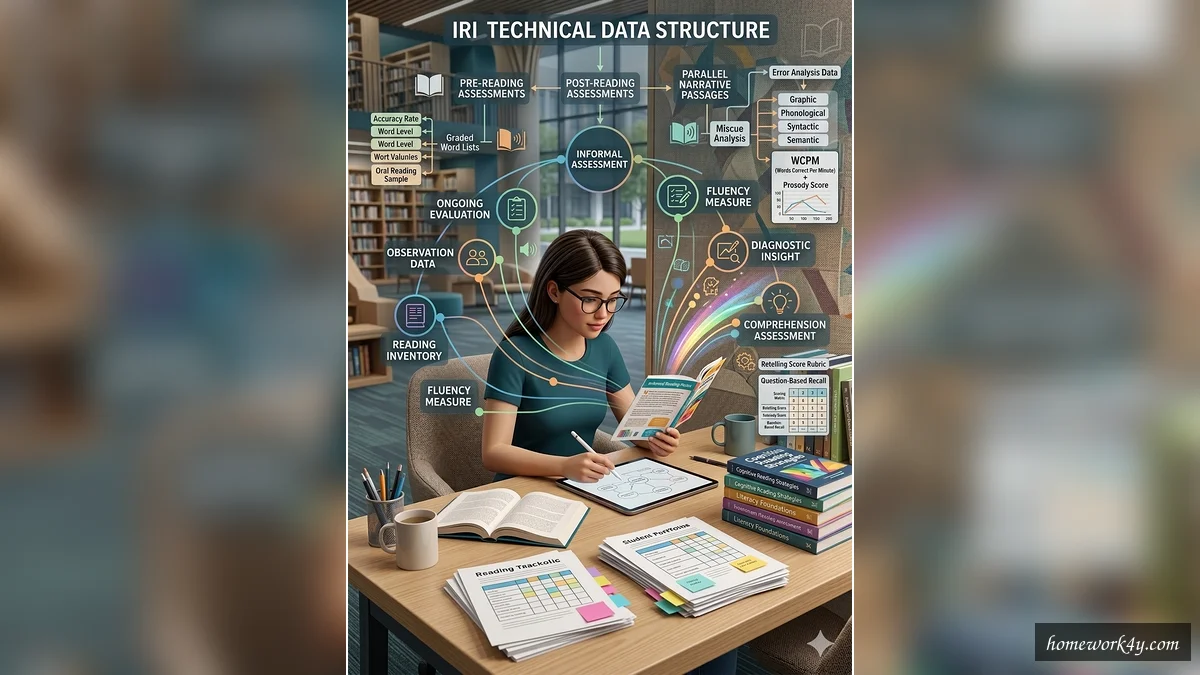
Informal reading assessments, such as the Jennings Informal Reading Inventory, are designed to evaluate a student's reading abilities in a non-standardized and qualitative manner. These assessments rely on empirical error-analysis models, utilizing graded word lists and parallel narrative passages to capture authentic reading behaviors. The goal of these assessments is to identify a student's strengths and weaknesses in reading, providing educators with the necessary information to design personalized, evidence-based remedial reading interventions.
Key Components of an Informal Reading Inventory
An informal reading inventory typically consists of several key components, including:- Graded word lists: used to assess a student's decoding abilities and identify any areas of difficulty
- Parallel narrative passages: used to evaluate a student's reading comprehension and fluency
- Error analysis: used to identify and analyze oral reading miscues, such as substitutions, omissions, and syntactic reversals
- Fluency assessment: used to evaluate a student's silent and oral reading fluency
- Comprehension assessment: used to evaluate a student's literal and inferential comprehension skills
The Importance of Informal Reading Inventories in Education
Informal reading inventories play a vital role in education, as they provide educators with a comprehensive understanding of a student's reading abilities. This information can be used to design personalized, evidence-based remedial reading interventions, helping to eliminate educational alienation and optimize reading equity. By using informal reading inventories, educators can identify areas of strength and weakness, and develop targeted strategies to support students in their reading development.Using Informal Reading Inventories to Inform Instruction
Informal reading inventories can be used to inform instruction in several ways, including:- Identifying areas of strength and weakness: informal reading inventories can help educators identify areas where students need additional support or enrichment
- Developing targeted interventions: informal reading inventories can be used to develop targeted interventions, tailored to a student's specific needs
- Monitoring progress: informal reading inventories can be used to monitor a student's progress over time, helping educators to evaluate the effectiveness of their instruction
Comparison of Informal Reading Inventories
There are several different types of informal reading inventories available, each with its own strengths and weaknesses. The following table provides a comparison of some of the most commonly used informal reading inventories:| Inventory | Description | Grades |
|---|---|---|
| Jennings Informal Reading Inventory | A comprehensive, non-standardized assessment of reading abilities | K-12 |
| Informal Reading Assessment (IRA) | A brief, non-standardized assessment of reading abilities | K-6 |
| Running Record | A detailed, non-standardized assessment of reading fluency and comprehension | K-12 |