



🎓 Homework Deadline Looming?
Struggling with assignments, projects, or lab reports on this topic? Connect with our expert academic tutors to get personalized study support tonight.
Get Expert Help Now →Introduction to Managing Client Care Assessment 2.0
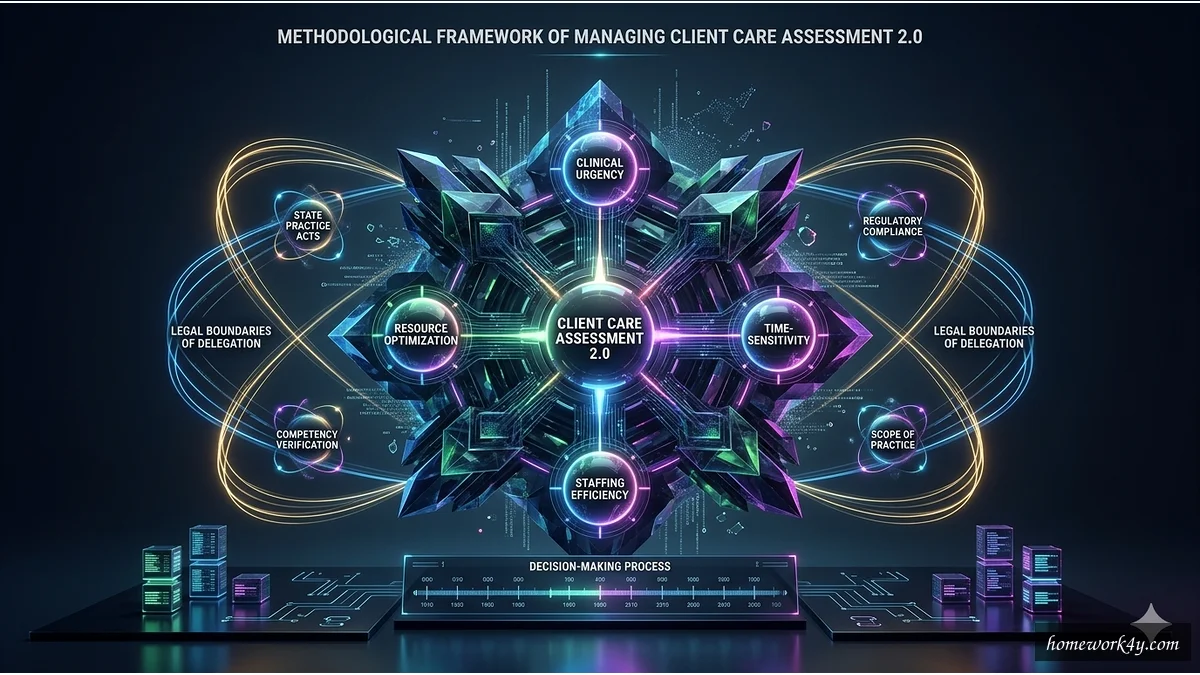
The ATI RN Content Mastery Series: Managing Client Care Assessment 2.0 provides a comprehensive framework for clinical leadership, workload prioritization, and clinical delegation within acute care ecosystems. This assessment framework integrates evidence-based nursing management principles with advanced clinical reasoning models, enabling newly licensed and registered nurses to transform raw clinical competencies into tactical administrative decisions.Understanding the Methodological Framework
The methodological framework of Managing Client Care Assessment 2.0 emphasizes the application of classic prioritization metrics, such as the ABCs (Airway, Breathing, Circulation), Maslow’s Hierarchy of Needs, and systemic-before-local intervention matrices. This framework also considers the strict legal boundaries of delegating responsibilities to Licensed Practical Nurses (LPNs) and Assistive Personnel (AP).
Philosophical Underpinnings of Client Care
The text reframes contemporary client care from a sequence of isolated medical tasks to a synchronized, safe systems operation. This approach utilizes interprofessional communication protocols like SBAR and IDEAL discharge planning, ensuring that client care is delivered in a coordinated and effective manner.Time Management Strategies for Nurses
A newly licensed nurse reviewing client assignments for a shift and determining tasks to complete should use time management strategies such as prioritizing tasks based on urgency and importance, delegating tasks to team members, and utilizing technology to streamline workflows.Improving Performance in Client Care
To improve performance when client care has been compromised, a nurse should:- Identify areas of compromise and assess root causes
- Implement evidence-based solutions to address identified issues
- Develop and implement a plan to prevent future compromises in client care
- Continuously monitor and evaluate the effectiveness of the plan
Delegation and Prioritization in Client Care
Delegation and prioritization are critical components of managing client care. Nurses should delegate tasks to team members based on their scope of practice and competence, and prioritize tasks based on urgency and importance. The use of prioritization metrics such as the ABCs and Maslow’s Hierarchy of Needs can help nurses make informed decisions about task prioritization.Interprofessional Communication in Client Care
Interprofessional communication is essential for delivering high-quality client care. Nurses should use communication protocols such as SBAR and IDEAL discharge planning to ensure that client care is coordinated and effective. This approach helps to prevent medical errors, protect client advocacy, and optimize cost-effective resource utilization.| Concept | Description | Application in Client Care |
|---|---|---|
| ABCs (Airway, Breathing, Circulation) | Prioritization metric for assessing patient needs | Used to prioritize tasks and delegate responsibilities to team members |
| Maslow’s Hierarchy of Needs | Theoretical framework for understanding human needs | Used to prioritize tasks and develop care plans that address patient needs |
| SBAR (Situation, Background, Assessment, Recommendation) | Communication protocol for interprofessional communication | Used to communicate patient information and develop care plans |
| IDEAL Discharge Planning | Protocol for planning patient discharge | Used to ensure that patients are discharged safely and effectively |